

Chettinad tiles are known for their beautiful patterns, handcrafted appearance, rich colors, and traditional Indian character. Over the years, they have become a popular choice for homeowners who want flooring and wall surfaces that feel artistic rather than ordinary. Chettinad tile patterns can bring warmth and personality to different areas of a home, from spacious living rooms to cozy bedrooms, kitchens, entrances, balconies, and courtyards.
One of the biggest attractions of these tiles is the variety available in patterns and colors. Some designs feature simple geometric shapes, while others include floral motifs, traditional borders, and detailed arrangements. This variety makes it easier for homeowners to select a design that matches both traditional and contemporary interiors.
For people looking for flooring that combines decorative appeal with a handcrafted feel, Chettinad tiles can be an interesting option. The right pattern can become a focal point in a room, while a subtle design can quietly complement furniture and other interior elements.
What Are Chettinad Tiles?
Chettinad tiles are decorative tiles traditionally associated with the Chettinad region of Tamil Nadu. They are admired for their artistic appearance and connection with traditional craftsmanship. Unlike completely uniform industrial flooring, handcrafted tiles can have small variations in color, texture, and pattern.
These subtle variations give the finished surface a natural and individual character. Instead of making every tile look exactly identical, the handmade appearance can create a more authentic visual effect.
Today, homeowners can find a variety of Chettinad handmade tile designs suitable for different interior styles. They can be incorporated into heritage-inspired houses as well as modern apartments where a traditional design element is needed.
Why Chettinad Tile Designs Are Gaining Attention
The growing interest in decorative flooring is one reason why Chettinad Tile Patterns continues to attract homeowners and interior enthusiasts. People are increasingly looking for materials that offer more visual interest than plain flooring.
Chettinad tiles can provide that decorative element through patterns, colors, and handcrafted details. They can also work as a contrast against simple walls and modern furniture.
Another advantage is flexibility. Instead of using patterned tiles throughout an entire house, homeowners can introduce them selectively in specific areas. An entrance, kitchen backsplash, bathroom wall, or living room floor can become a statement area without changing the entire interior.
This makes Chettinad tiles suitable for people who want to introduce traditional Indian design without creating an overly traditional environment.
Exploring Different Chettinad Tile Patterns
Patterns are at the heart of these tiles. Chettinad tile designs can range from simple arrangements to detailed decorative compositions.
Geometric designs are a popular choice for contemporary spaces. Squares, diamonds, lines, and repeating shapes can create a structured appearance while still maintaining the handmade character of the tiles.
Floral patterns are better suited to homeowners who prefer softer and more decorative interiors. These designs can work particularly well with wooden furniture, traditional accessories, and warm wall colors.
Some tiles also feature border patterns that can be used around the edges of a room. A border can visually frame the flooring and give the installation a more finished appearance.
When selecting a pattern, it is important to think about the size of the room. Highly detailed patterns can become visually dominant in a small space, while larger rooms can usually accommodate more elaborate designs.
Traditional Chettinad Designs With a Modern Look
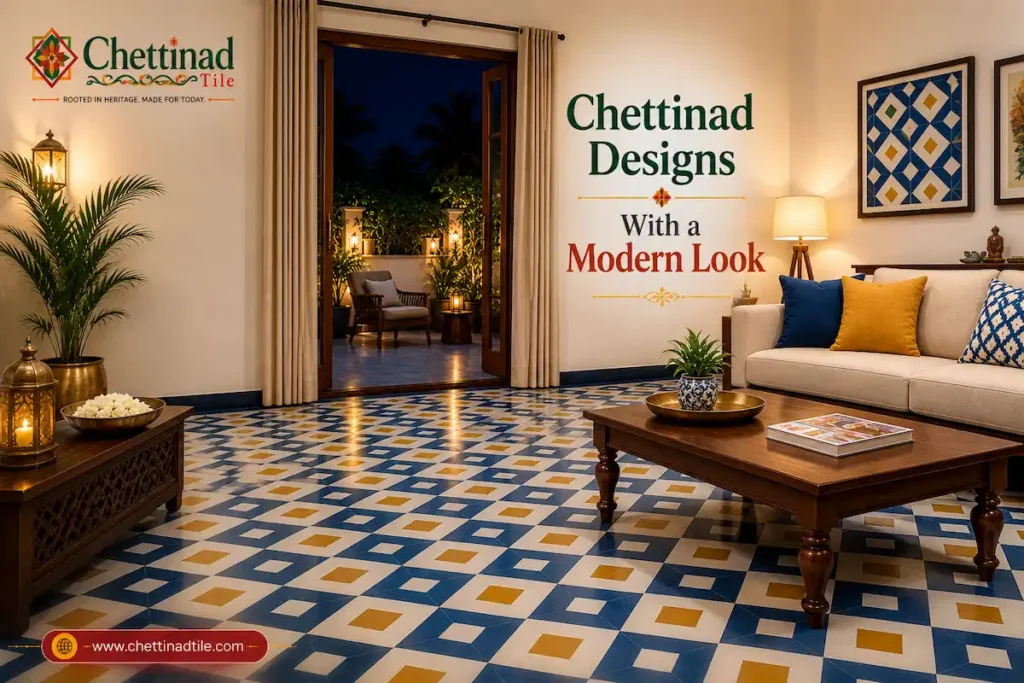
Traditional does not always mean old-fashioned. With the right combination of colors, furniture, and layout, traditional Chettinad tile designs can look surprisingly modern.
For example, a geometric tile pattern in neutral shades can be paired with a minimalist sofa and contemporary lighting. Similarly, a colorful traditional pattern can be used as a backsplash against simple kitchen cabinets.
The key is balance. If the tiles contain several colors or detailed motifs, the surrounding décor can remain relatively simple. This allows the flooring or wall design to remain visible without making the room feel crowded.
This combination of traditional craftsmanship and contemporary styling is particularly useful for Indian homes where homeowners want to preserve cultural design elements while maintaining a modern appearance.
Choosing the Right Colors for Your Interior
Color can completely change how a tile pattern looks in a room. Chettinad tile patterns and colors are available in combinations that can suit both vibrant and understated interiors.
Warm shades such as terracotta, red, mustard, brown, and earthy tones can create a traditional and welcoming atmosphere. These colors can work especially well with wooden furniture and natural materials.
For a more contemporary appearance, homeowners can consider combinations involving white, cream, grey, black, or muted shades. Such combinations can make decorative patterns look more balanced and easier to coordinate with modern interiors.
Before making a final decision, it is useful to view a tile sample in the actual room. Natural daylight, artificial lighting, wall color, and furniture can all affect how the tile appears.
Chettinad Tile Designs for Living Rooms
The living room is often the first area where homeowners want to create a strong impression. Chettinad tiles for living room interiors can provide a decorative foundation for the entire space.
A patterned floor can work beautifully with simple sofas, wooden tables, neutral curtains, and indoor plants. If the furniture is already colorful or heavily decorated, a simpler tile pattern may create a better balance.
For larger living rooms, homeowners can also use a border around the main flooring area. Another approach is to use decorative tiles in a specific seating zone while keeping surrounding surfaces visually quieter.
The goal is not to fill every available surface with patterns. Instead, the tiles should complement the room’s furniture, lighting, and overall design theme.
Bringing Chettinad Tiles Into the Bedroom
Bedrooms generally benefit from designs that feel comfortable and visually calm. This does not mean that decorative tiles cannot be used. Chettinad tiles for bedroom spaces can add character when the right pattern and color combination is selected.
Soft geometric patterns, muted colors, and smaller decorative motifs can work well in bedrooms. They can be paired with wooden beds, neutral bedding, woven accessories, and simple lighting.
If a bold patterned floor is selected, keeping the walls and furniture relatively simple can prevent the room from appearing too busy.
Using Chettinad Tiles in the Kitchen
The kitchen provides several opportunities for decorative tile applications. Chettinad tiles for kitchen spaces can be considered for flooring, backsplashes, accent walls, or selected sections.
A patterned backsplash can create a focal point behind the cooking or preparation area. It can be paired with plain cabinets so that the tile design remains the main decorative feature.
For kitchen flooring, homeowners should consider practical factors such as the expected foot traffic, cleaning requirements, and suitability of the selected tile for the intended application.
The color of the cabinets should also be considered. Wooden cabinets can pair naturally with earthy tile shades, while white or neutral cabinets provide more freedom to introduce colorful patterns.
Creating a Decorative Bathroom
Bathrooms can also benefit from carefully selected patterned surfaces. Chettinad tiles for bathroom interiors can introduce color and visual detail without requiring extensive decoration.
One option is to use patterned tiles on a feature wall while keeping the remaining surfaces simpler. They can also be incorporated around a vanity area or another selected section.
Because bathrooms are exposed to moisture, homeowners should always choose products suitable for the intended application and follow the manufacturer’s installation and care recommendations.
A balanced combination of decorative and plain surfaces can help maintain a clean and spacious appearance.
Entrance, Balcony, and Courtyard Ideas
The entrance of a home is an excellent place to introduce decorative flooring. A carefully selected pattern can create an attractive transition between the exterior and interior.
Chettinad floor tile designs can also work well in suitable balconies, verandas, and courtyard areas. Traditional patterns can complement plants, wooden seating, natural textures, and earthy décor.
A courtyard with a decorative central pattern and a simple surrounding border can create a distinctive visual effect. Similarly, a balcony can use patterned flooring to create a more inviting outdoor corner.
For outdoor applications, however, homeowners should confirm that the selected tile is appropriate for the specific environmental conditions and installation area.
How to Select the Best Chettinad Tile Design
Choosing the right design requires more than simply selecting a pattern that looks attractive in a showroom. Start by considering the room where the tiles will be installed.
Think about the existing wall colors, furniture, lighting, room size, and overall interior theme. If the room is already highly decorative, a subtle pattern may work better. If the interior is simple, a more expressive tile design can become an attractive focal point.
It is also useful to calculate the required quantity carefully. Purchasing samples first can help homeowners judge the actual color and pattern before committing to a larger order.
Maintenance Tips for Chettinad Tiles
Regular maintenance can help keep decorative flooring looking attractive. Dust and loose particles should be removed regularly to prevent them from remaining on the surface.
For routine cleaning, use methods recommended by the tile manufacturer. Avoid experimenting with strong chemicals because unsuitable cleaning products may affect the surface or appearance.
Spills should be cleaned promptly, particularly when they involve substances that can leave noticeable marks. Heavy furniture should also be moved carefully rather than dragged across the floor.
A consistent and gentle cleaning routine is generally better than aggressive cleaning performed occasionally.
Benefits of Choosing Chettinad Tile Designs
There are several reasons homeowners consider Chettinad Tile Patterns for their interiors.
Distinctive appearance:
Their patterns can give a room a strong visual identity.
Handcrafted character:
Subtle variations can contribute to an authentic handmade appearance.
Design variety:
Geometric, floral, traditional, and contemporary-inspired patterns provide different styling possibilities.
Decorative flexibility:
Tiles can be used across selected areas rather than throughout the entire house.
Indian design appeal:
They can introduce traditional elements into contemporary interiors.
Interior versatility:
Depending on the product and application, they can complement living rooms, bedrooms, kitchens, bathrooms, entrances, and other spaces.
Final Thoughts on Chettinad Tile Designs
A beautiful home does not always require complicated decoration. Sometimes, the right flooring or wall detail can completely change the character of a space. Chettinad Tile Patterns offers homeowners an opportunity to introduce patterns, colors, craftsmanship, and traditional Indian character into their interiors.
From geometric arrangements and floral motifs to earthy shades and colorful combinations, there are many ways to use these tiles creatively. They can become the centerpiece of a living room, add personality to a kitchen, create a decorative bathroom feature, or bring traditional charm to an entrance or courtyard.
The best choice depends on the room, interior style, color palette, practical requirements, and personal taste. By selecting the pattern carefully and maintaining the tiles properly, homeowners can create spaces that feel warm, distinctive, and thoughtfully designed.
“A thoughtfully chosen tile can turn an ordinary surface into a memorable part of the home.”
Frequently Asked Questions
Are Chettinad tiles suitable for modern interiors?
Yes. Traditional patterns can work well in modern interiors when paired with simple furniture, neutral walls, and balanced décor. Geometric designs are particularly easy to incorporate into contemporary spaces.
What are the most popular Chettinad tile patterns?
Popular choices include geometric arrangements, floral motifs, repeating shapes, decorative borders, and traditional Indian-inspired patterns. The ideal option depends on the room and desired style.
Can Chettinad tiles be used in the kitchen?
Suitable Chettinad tiles for kitchen applications can be used for flooring, backsplashes, and selected decorative areas, provided the product is appropriate for the intended use.
Are Chettinad tiles good for living rooms?
Yes. Chettinad tiles for living room spaces can create an attractive decorative foundation. The pattern should be selected according to the room size, furniture, and overall interior style.
How do I maintain Chettinad tiles?
Regular dust removal and gentle cleaning are recommended. Always follow the manufacturer’s specific care instructions and avoid unsuitable cleaning chemicals.
Can these tiles be used outdoors?
Some products may be suitable for particular outdoor applications, but suitability depends on the tile, surface, weather exposure, and installation conditions. Always confirm the manufacturer’s recommendations before installation.