
Introduction

A floor can be used for much more than just covering a room’s surface. Warmth, pattern, culture, and individuality may all be added to an environment with the correct flooring. Chettinad handmade tiles are unique in this regard. These tiles, which are inspired by the rich architectural character of Chettinad homes, have a handcrafted quality that may elevate conventional settings.
Handmade tiles are valued for their own character, in difference to flooring that strives for total conformity. Every installation can have a natural and artistic appearance thanks to subtle variations in tone, pattern, and texture.
“The beauty of handmade flooring lies in the character of every individual piece.”
These tiles can be creatively used in both modern Indian homes and traditional homes with décor inspired by heritage. Their earthy appearance can go well with wood, stone, brass, and other natural materials, and their patterns can constitute a significant design element.
The Character Behind Every Tile
Craftsmanship is the first factor that makes handcrafted flooring appealing.
Generally speaking, mass produced tiles are made to have a very uniform appearance. A different strategy is used with handmade tiles. Subtle variances that give the finished floor a more genuine visual character can be created by their handcrafted creation.
You may notice slight differences in:
- Color intensity
- Pattern details
- Surface texture
- Edge appearance
- Tonal variation
These variations don’t always indicate that the tiles are flawed. They contribute to the appeal of handmade flooring for many consumers.
These minor changes might produce a floor that seems more natural and visually appealing when spread out over a bigger space.
A Design Language Inspired by Chettinad
Strong decorative identities, intricate interiors, courtyards, traditional materials, and thoughtfully planned spaces are all hallmarks of Chettinad architecture. Chettinad inspired flooring is another example of this influence.
The designs might be as simple as geometric arrangements or as complex as patterns. While some give furniture and décor a more subdued backdrop, others produce a striking decorative impact.
This flexibility makes Chettinad handmade tiles suitable for different interior preferences rather than limiting them to one particular style.
Patterns That Set the Mood
The pattern you select can completely change the atmosphere of a room.
Geometric Rhythm
Geometric patterns create structure and repetition. They can be especially effective in rooms where the furniture is simple and the flooring is intended to become the main visual feature.
Floral Detailing
Floral motifs bring a softer decorative quality. They can complement traditional furniture, natural fabrics, and warm interior colors.
Heritage-Inspired Motifs
For homeowners who want a stronger connection with Indian architectural traditions, heritage-inspired patterns can create a distinctive setting.
Subtle Repetition
Not every design has to be audacious. While keeping a more modern appearance, simpler repeating patterns can offer handcrafted charm.
Instead of picking a design just because it appears good in a catalog, it’s crucial to choose a pattern based on the atmosphere you want to create.
Where the Tiles Can Make an Impact
One of the strengths of handmade decorative flooring is its ability to work across different parts of a property.
Give the Living Room a Focal Point
The design of the living room can be built around a patterned floor. It can draw attention to the flooring without overcrowding the space when paired with minimalist furnishings.
The traditional style of the tiles can be complemented by handcrafted items, neutral walls, and wooden seats.
Add Detail to the Entrance
The first impression of a house is formed by its entrance. This space can feel cozy and visually striking with a thoughtfully chosen patterned floor.
Without encompassing the entire property, even a little tiled area can make an impression.
Bring Personality to a Courtyard
Courtyards naturally work well with traditional Indian design. Plants, natural textures, wooden furniture, and patterned flooring can come together to create a relaxed environment.
Create a Traditional Veranda
When a veranda’s flooring blends in with the house’s architectural style, it might become more welcoming. Handmade patterns complement traditional décor, wooden doors, and columns very well.
Make the Kitchen More Characterful
Flooring can add warmth to a kitchen that otherwise contains many functional surfaces. However, buyers should always check whether the selected tile and finish are appropriate for the kitchen environment.
The Art of Mixing Traditional and Modern
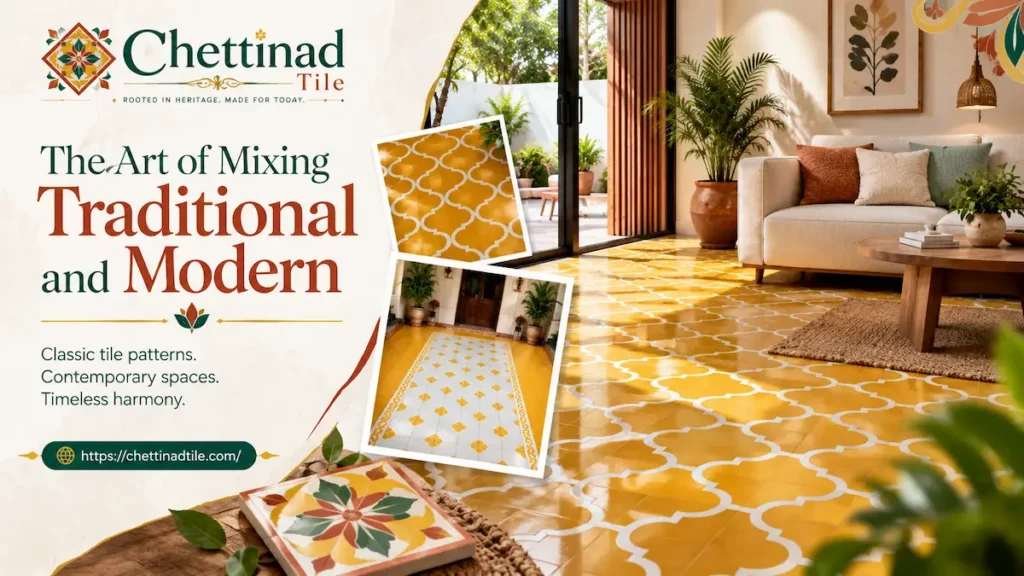
The idea that traditional tiles require an entirely traditional interior is one prevalent misunderstanding.
That isn’t always the case.
A beautiful Chettinad-inspired floor can make a modern space with minimal lighting, neutral walls, and clean furniture look stunning. A smart and well-balanced room can be produced by contrasting modern furniture with traditional flooring.
For example, you could combine:
- Patterned flooring with plain walls
- Wooden furniture with geometric tiles
- Modern lighting with heritage, inspired patterns
- Neutral upholstery with earthy tile colors
- Minimal decor with a detailed floor
The secret is balance. If the floor contains a strong pattern, keeping some surrounding elements simple can help the design breathe.
Why Homeowners Choose This Style
The attraction of Chettinad tile designs is not based on appearance alone. Their handcrafted character can contribute to the overall identity of a space.
Individual Visual Character
The natural variation between handmade pieces can prevent the floor from looking overly mechanical.
Decorative Strength
A well-selected pattern can act almost like a permanent design element, reducing the need for excessive decoration elsewhere.
Connection with Tradition
These tiles can help introduce elements of Indian architectural heritage into modern residential spaces.
Flexible Styling
They can work with both traditional and contemporary furniture when the colours and patterns are selected carefully.
Strong Design Presence
Unlike plain flooring that quietly supports the room, patterned handmade tiles can become one of its most noticeable features.
Choosing Tiles Without Regret
For every job, the most attractive tile may not be the best option. Think about how the space will be used before placing an order.
Consider foot traffic, moisture exposure, cleaning needs, furniture placement, and the room’s overall design.
Color is just as significant. While lighter colors could provide the impression of brightness, warm earthy hues can make a room feel cozy and traditional.
You should also think about how the design will appear when it is repeated on a big floor. When installed throughout a room, a design that appears appealing on one sample may have a completely different visual impact.
Your Pre-Purchase Checklist
Before placing an order, use this simple checklist to review the important points.
| Check | What to Review | Why It Matters | ✓ |
| ☐ | Tile Design | Make sure the pattern suits your interior. | ☐ |
| ☐ | Tile Size | Helps you plan the overall floor layout | ☐ |
| ☐ | Colour & Finish | Should work with walls and furniture | ☐ |
| ☐ | Required Quantity | Helps reduce shortages during installation | ☐ |
| ☐ | Extra Tiles | Useful for cuts, breakage, or future repairs | ☐ |
| ☐ | Installation Method | Ensures the tiles are installed correctly | ☐ |
| ☐ | Maintenance Needs | Helps you understand long-term care | ☐ |
| ☐ | Intended Usage | Confirms the tile suits the selected area | ☐ |
This checklist is particularly useful when comparing different designs because it shifts the focus from appearance alone to the complete flooring requirement.
Installation Can Change the Final Look
Even a beautiful tile design can lose its impact if the installation is poorly planned.
The surface should be properly prepared before installation. The layout should also be planned in advance, particularly when the tiles contain repeating patterns.
Installers need to consider:
- Starting points
- Pattern alignment
- Tile spacing
- Edge cuts
- Room dimensions
- Transitions between areas
Ordering a little extra material can also be sensible. Cutting around corners and edges can result in some wastage, while keeping spare tiles can make future repairs easier.
Keeping the Handmade Look Beautiful
Regular maintenance should be constant, but it doesn’t have to be difficult.
To prevent particles from staying on the surface, routinely remove dust and loose dirt. Use a gentle cleaning solution appropriate for the particular tile for routine cleaning.
Strong chemicals should be avoided unless the manufacturer certifies that they are safe for the tile surface.
Follow the suggested maintenance guidelines if the specific tile needs to be sealed or treated on a regular basis. The appearance and functionality of the flooring can be preserved with proper maintenance.
Design Pairings That Work Well
The surroundings can either enhance or compete with patterned flooring.
For a traditional Indian atmosphere, consider combining handmade tiles with wooden furniture, brass décor, warm fabrics, and natural materials.
For a more contemporary setting, use clean-lined furniture, neutral walls, simple lighting, and limited decorative accessories.
You can also use the tiles selectively instead of covering every surface. A patterned entrance, kitchen section, courtyard, or decorative border can introduce the character of Chettinad flooring without overwhelming the interior.
When Handmade Flooring Is the Right Choice
Chettinad handmade tiles can be a strong choice for people who appreciate individuality and decorative craftsmanship.
They are particularly suitable when the goal is to create a floor that contributes to the personality of the room rather than simply blending into the background.
However, buyers who prefer perfectly identical tiles and completely uniform surfaces may prefer other flooring options.
The decision should ultimately depend on the look you want, the area’s requirements, installation conditions, and the level of maintenance you are comfortable with.
Frequently Asked Questions
Are Chettinad handmade tiles suitable for modern homes?
Yes. They can work beautifully in modern homes when paired with simple furniture, neutral colours, and contemporary décor. The contrast can create an interesting combination of traditional and modern design.
Do handmade tiles have color variations?
They can have subtle variations in colour and tone. These differences are part of the handcrafted appearance and can give the completed floor a more natural character.
Can these tiles be used outdoors?
Suitability depends on the specific tile, finish, climate, and installation conditions. Always confirm the manufacturer’s recommendations before using them outdoors.
Are Chettinad handmade tiles difficult to maintain?
Maintenance depends on the specific material and finish. Regular cleaning with appropriate products and following recommended care instructions can help keep the surface looking attractive.
How many extra tiles should I buy?
The amount of extra material depends on the room layout, tile size, cutting requirements, and installation pattern. Your installer or supplier can help estimate the appropriate quantity.
Can different patterns be combined?
Yes, but the combination should be planned carefully. Using one dominant pattern with a simpler complementary design can create a more balanced result.
Are handmade tiles suitable for high-traffic areas?
This depends on the specific product and its technical properties. Check the manufacturer’s recommendations for the intended application before purchasing.
What makes Chettinad flooring distinctive?
Its combination of decorative patterns, traditional inspiration, handcrafted character, and natural variation gives it a distinctive visual identity.
Final Thoughts
Flooring has a powerful influence on how a space looks and feels. Chettinad handmade tiles offer an opportunity to make that flooring part of the home’s identity through traditional patterns, handcrafted character, and distinctive visual details.
Their versatility allows them to work with both classic and contemporary interiors. Whether used across an entire room or as a carefully selected design feature, they can add warmth and personality without relying on excessive decoration.
The best result comes from looking beyond the pattern itself. Consider the room, colour palette, tile size, installation method, maintenance requirements, and quantity before making your final selection.
When craftsmanship and thoughtful design come together, handmade flooring can turn an ordinary surface into one of the most memorable features of a home.