
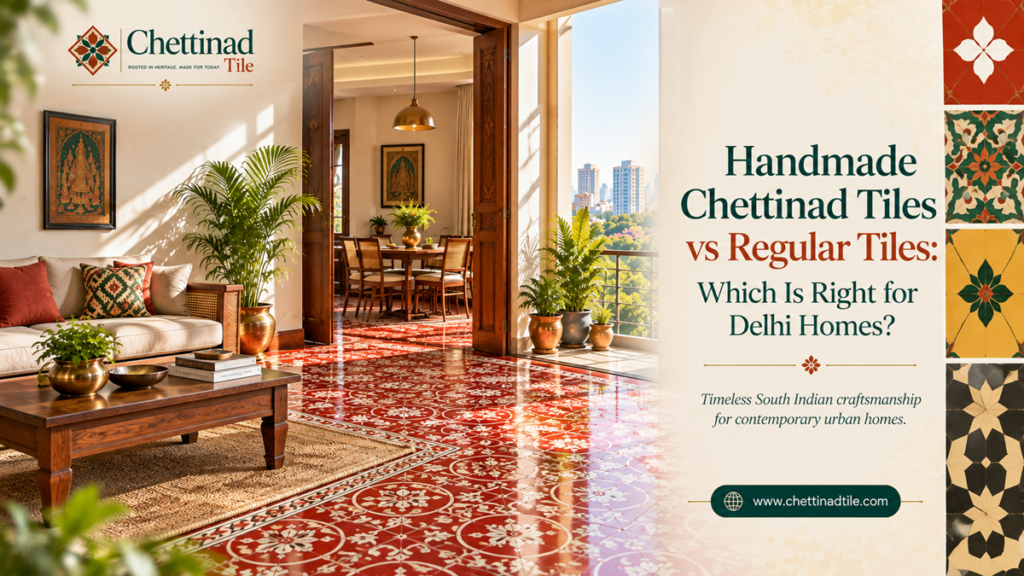
Choosing the flooring is a big decision when you are working on designing a home or doing a renovation. Floors have an impact on how a room looks. They go well with furniture and the colors of the walls. They also help create the style and feel of the space. For people who live in Delhi, the decision usually ends up being between choosing decorative flooring or going with more common modern tiles.
Handmade Chettinad tiles are famous for their patterns, deep colors, and the skill that goes into making them. Regular tiles, like porcelain tiles and other types that are made in large amounts, come in many different finishes, sizes, and designs. These options can fit budgets and real-life needs.
Which one is the best for your home? The answer depends on your style, how much effort you want to put into keeping things clean, your budget, what the room is used for, and the look you are going for.
In this guide,e we look at Chettinad tiles and regular tiles. We check them for how they look, how they are designed, how easy they are to take care of, how strong they are, where they work best, and what to think about when you buy them. This helps you choose the option for your home in Delhi.
What Are Handmade Chettinad Tiles?
I have seen Handmade Chettinad tiles for homes. Handmade Chettinad tiles belong to the architecture of the Chettinad region in Tamil Nadu. I love how Handmade Chettinad tiles show patterns, coordinated colours and a heritage‑inspired look.
Handmade Chettinad tiles can add character to living rooms, entrance areas, dining spaces, courtyards and other chosen feature areas. The patterned surfaces of Handmade Chettinad tiles can become a point even if you do not add extra decoration.
The manufacturing process, materials, finish and dimensions of Handmade Chettinad tiles may differ from one product to another. Therefore,e buyers should always confirm the specifications of Handmade Chettinad tiles before they buy.
For homeowners exploring traditional patterns for contemporary interiors, the Chettinad Tiles portfolio offers a starting point for design inspiration.
What Are Regular Tiles?
Regular tiles are a term that is often used for tiles that you can buy in stores for floors and walls. These tiles include porcelain types. They come in colors, designs, sizes, and surface finishes. Some of them have plain surfaces in neutral colors, while others look like real stone, wood, concrete, te or have interesting patterns.
Because they are so easy to find, you can choose styles that fit apartments, family homes, offices, and other places. Regular tiles are not all the same. How well they work depends on the material they are made from, how well they are made, the surface finish, how they are put in place, and what they are used for.
To make a comparison, it is important to look at each specific tile and not think that all handmade tiles or all regular tiles are the same.
Handmade Chettinad Tiles vs Regular Tiles: Key Differences
The following comparison highlights the main considerations for Delhi homeowners.
| Feature | Handmade Chettinad Tiles | Regular Tiles |
| Appearance | Decorative patterns and heritage-inspired character | Options ranging from plain finishes to contemporary designs |
| Design style | Often suited to traditional, eclectic, and statement interiors | Suitable for minimalist, contemporary, and traditional interiors |
| Visual effect | Can create a distinctive focal point | Can create a uniform appearance or a decorative feature |
| Design coordination | Pattern placement may need careful planning | Standardised designs may be easier to coordinate |
| Maintenance | Depends on material, finish, and manufacturer guidance | Depends on tile type, surface, grout, and finish |
| Durability | Depends on product quality, suitability, and installation | Varies between ceramic, porcelain, and other materials |
| Installation | May require careful pattern alignment and specialist guidance | Depends on dimensions, material, layout, and installation requirements |
| Budget | Depends on design, production, quantity, and transportation | Available across a broad range of price points |
| Best use | Feature flooring, entrances, living areas, and heritage-inspired interiors | General flooring, bathrooms, kitchens, and many other applications, depending on product suitability |
Neither category is automatically better in every situation. The right choice depends on the requirements of your space and the characteristics of the actual product.
1. Appearance and Aesthetic Appeal
Handmade Chettinad Tiles: Distinctive Patterns and Traditional Character
One of the reasons homeowners look for handmade Chettinad tiles for Delhi homes is their beautiful look. The designs and color choices can add appeal to a room that might otherwise be plain. By seeing the floor as just a background,d homeowners can make patterned flooring an important part of how the space looks.
For example, le a living room with colored walls, wood furniture,ure and simple decorations can get a nice touch from a decorated tiled floor.
An entrance area can also stand out more with a pattern that is chosen carefully. Chettinad-style designs can fit both traditional houses and modern homes when the colors and designs match the rest of the interior.
Regular Tiles: Versatile and Consistent Finishes
Regular tiles offer a lot of flexibility. Homeowners can pick colors, stone‑like finishes, wood‑looking surfaces, or decorative designs. Regular tiles let you match any style.
Large‑format regular tiles, with fresh designs, can give a calm look to a room. Patterned regular tiles add a decorative touch.
If you like flooring that works with many furniture styles as time passes, regular tiles are a good and practical choice.
The key difference: Handmade Chettinad tiles can make the floor a central design feature, while regular tiles provide options for both subtle backgrounds and decorative statements.
2. Design Options for Delhi Homes
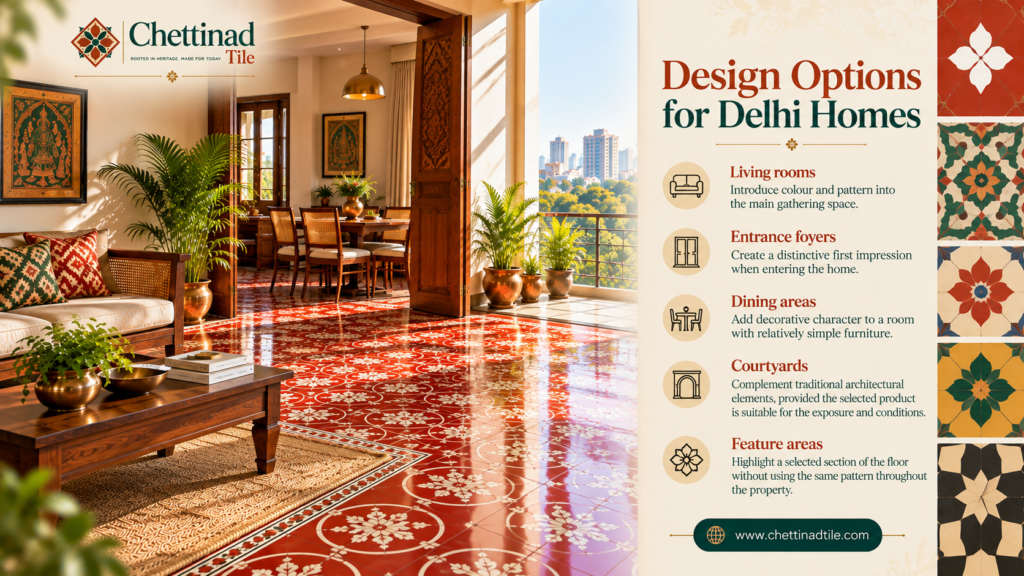
Delhi homes include a variety of architectural styles, from compact apartments and builder floors to independent houses and spacious residences. The ideal flooring depends on the layout, lighting, furniture, and personal preferences of the homeowner.
Where Chettinad Tiles Work Well
Handmade Chettinad tiles can be considered for:
- Living rooms: Introduce colour and pattern into the main gathering space.
- Entrance foyers: Create a distinctive first impression when entering the home.
- Dining areas: Add decorative character to a room with relatively simple furniture.
- Courtyards: Complement traditional architectural elements, provided the selected product is suitable for the exposure and conditions.
- Feature areas: Highlight a selected section of the floor without using the same pattern throughout the property.
For smaller rooms, consider how frequently the pattern repeats and how the colours interact with the available light. A visually complex design may work best when balanced with simpler walls and furnishings.
Where Regular Tiles Work Well
Regular tiles may be suitable for:
- Contemporary apartments with minimalist interiors.
- Bedrooms where a subtle visual appearance is preferred.
- Kitchens and bathrooms, subject to appropriate slip resistance and product suitability.
- Areas where consistent dimensions and a uniform layout are important.
- Larger projects that require several coordinated tile finishes.
These are general guidelines rather than fixed rules. The actual product specifications and the intended use should determine suitability.
3. Maintenance and Everyday Cleaning
Maintenance matters a lot for households. Maintenance is important for Delhi homeowners who should think about dust and everyday foot traffic, food spills, cleaning routines, es and the needs of children or older family members.
Maintaining Handmade Chettinad Tiles
The cleaning requirements of Chettinad tiles depend on the material of handmade Chettinad tiles, the surface finish of handmade Chettinad tiles,les and any recommended protective treatment of handmade Chettinad tiles.
Before you buy, ask the supplier about cleaning products, ask the supplier about the sealing requirements, ask the supplier about the stain resistance, and ask the supplier about the precautions for everyday maintenance of handmade Chettinad tiles.
As a general approach:
- Remove loose dust and grit regularly.
- Clean using a method recommended for the particular tile.
- Avoid harsh chemicals unless the manufacturer confirms they are suitable.
- Wipe spills promptly, especially when the material or finish may be susceptible to staining.
- Use appropriate cleaning methods for grout joints.
Do not assume that every handmade tile requires sealing or that every product can be cleaned in the same way. Follow the specific manufacturer’s guidance.
Maintaining Regular Tiles
Standard tiles can also be simple to care for, but they each have their very own cleansing necessities.
A glazed ceramic or porcelain tile is fairly easy to clean under normal use around the home. Grout joints can also be a dirt catch, and textured surfaces can be a challenge.
Inquire about a product’s stain-resistant qualities, cleanability, textured surface, and suitability for a specified room before making a selection.
Maintenance tip: It is important to compare the actual product specifications and maintenance instructions and not simply to compare the size of each tile.
4. Durability and Long-Term Performance
Flooring is a long-term investment, so buyers should look beyond appearance.
What to Consider with Chettinad Tiles
Product information will be provided indicating its durability and for what purpose it is suitable. The longevity of the handmade Chettinad tiles will vary by product.
Ensure you select the correct tile for the degree of foot traffic expected in your room before placing your order. Inquire about preparation of the underlying surface, materials for installation, and care and maintenance instructions, including protection options.
For heavily trafficked entrances or living spaces, inform your supplier and installer about how your door will be used before choosing.
What to Consider with Regular Tiles
Regular tiles come from different types of materials. Ceramic and porcelain tiles, for example,e can behave differently based on how they’re made.
When looking at choices, think about what the tiles will be used for, how much water they can soak up if that matters, how the surface looks, how well they stand up to being worn down, and if they work well in the place where they will be put.
Never think that all porcelain tiles are good for everything or that all ceramic tiles act the same way.
Which Is More Durable?
No single answer can be given by looking at a category name. A tile that is chosen carefully and installed correctly can perform better than a product that’s not suitable, whether the tile is handmade or made in a factory.
Ask for details about the product and have your installer confirm that the flooring you select will work well in your home.
5. Price and Budget Considerations in Delhi
Budget is often one of the deciding factors when comparing handmade Chettinad tiles vs regular tiles.
The overall cost of a flooring project includes more than the purchase price of the tiles. I often notice that measurements, cutting, wastage, installation, finishing materials, transportation, and any necessary surface preparation can all affect the budget of a flooring project.
Cost Factors for Handmade Chettinad Tiles
The price of handmade Chettinad tiles may vary according to:
- The complexity of the selected design.
- Tile dimensions and product specifications.
- The quantity required for the project.
- Availability and production requirements.
- Packaging and transportation.
- Installation and any product-specific finishing requirements.
Decorative patterns may also require more careful layout planning, depending on the design.
Cost Factors for Regular Tiles
Regular tiles are available across a range of price points. Regular tiles can cost more or less depending on the material, brand, size, surface finish, design, and intended application.
Some standard designs are readily available. Premium finishes or specialised products cost considerably more.
How to Compare Quotes Properly
When collecting quotations, compare the complete project requirements rather than looking only at the price per square foot.
Ask each supplier to clarify:
- The exact product and dimensions.
- The quantity covered by the quotation.
- Whether taxes and transportation are included.
- The expected wastage allowance.
- Installation and finishing costs, if quoted.
- Availability, delivery arrangements, and payment terms.
For your project, you can contact Chettinad Tiles for product and ordering enquiries and discuss the designs and quantities you are considering.
No specific Delhi market price should be assumed without a current quotation for the selected product and delivery requirements.
6. Installation and Planning Requirements
The installation process can influence the appearance and performance of any tiled floor.
Installing Handmade Chettinad Tiles
Patterned flooring often works best when you plan carefully before you start. The person putting it in may have to think about where to begin, how the pattern repeats, how borders line up with the size of the room door openings, and how to cut around corners or columns.
Before laying anything go over the layout with the contractor and make sure there is enough material for the design you want. Stick to the supplier’s instructions for getting the base ready, how to secure the flooring,g and how to finish it properly.
Installing Regular Tiles
Regular tiles also need planning and proper installation. Larger tile sizes, certain surface finishes, complicated layouts, or rooms with unusual shapes can bring their own difficulties.
The installer must check the substrate, confirm tile dimensions, review the layout, make sure joint requirements are met, and choose the installation materials.
In both situations, it’s important to inspect a sample section that has been installed before moving with the entire area.
7. Choosing Tiles for Different Rooms
The best flooring choice depends on how each room is used.
Living Room
If you want a decorative centrepiece, Chettinad tiles for living rooms can help establish the style of the interior. Balance the pattern with wall colours, furniture, and other finishes.
Regular tiles are another option if you prefer a restrained appearance or want flooring that coordinates with changing décor.
Bedroom
For a tranquil and straightforward bedroom, neutral regular tiles could be your cup of tea. To grow your more expressive interior, the look of this patterning by the Chettinad would do for the bed.
Think about how the light comes into the room, the way the furniture is laid out, and the overall plan before you make a decision.
Kitchen
For kitchens, prioritise cleanability, suitability for the intended application, and slip resistance under expected conditions.
Both decorative and regular tiles may be options, but confirm the specifications of the particular product before using it on a kitchen floor.
Entrance and Courtyard
A patterned Chettinad floor can make an entrance visually distinctive. For courtyards and other exposed areas, however, check whether the product is suitable for the relevant moisture, weather, and surface conditions.
Do not select a tile for an outdoor application based on appearance alone.
8. Which Tiles Are Better for Delhi’s Climate?
Delhi has summers, seasonal rains, and cooler winter weather. Tile thinks climate alone does not decide which tile is best for a home.
The spot where a tile is laid, how much sun and moisture it gets, the base material, the tile details, and the care needed all matter when picking a tile.
When choosing floor tiles, I focus on how a tile fits the purpose, on the right way to install the tile, and on the maker’s care instructions for that tile.
For balconies, terraces, courtyards, or other open spots, ts ask about how the tile handles weather, how much water it takes in, how slip-safe it is, and whether the tile fits the use.
Do not assume that a tile is suitable for outdoor conditions simply because it is traditionally styled or marketed as durable. Verify its intended application before purchasing.
9. How to Choose the Right Tiles for Your Home
Before making your final decision, consider the following questions.
What style do you prefer?
Choose handmade Chettinad tiles if you are drawn to decorative patterns and heritage-inspired interiors. Consider regular tiles if you prefer a simpler appearance or a particular modern finish.
How will the room be used?
Think about foot traffic, spills, moisture, cleaning routines, and the people using the space.
What is your complete budget?
Include materials, wastage, installation, transportation, and finishing requirements.
How much maintenance are you comfortable with?
Review the specific care instructions for each product and consider whether they fit your daily routine.
Can you review a sample?
Where possible, examine a physical sample under the lighting conditions of your home and compare it with your furniture and wall finishes.
Is the product available in the required quantity?
For a large project, confirm availability, lead times, and the procedure for obtaining additional tiles if needed.
You can learn more about the business and its approach to tile designs on the Chettinad Tiles About Us page.
10. Common Mistakes to Avoid When Buying Tiles
Even a well-designed home can encounter flooring problems if the selection and installation are not properly planned.
Avoid these common mistakes:
- Choosing tiles only from online photographs without checking relevant specifications.
- Comparing prices without confirming the material, dimensions, and quantity.
- Ignoring cutting and wastage when estimating the order.
- Selecting flooring without considering slip resistance in areas exposed to moisture.
- Overlooking the cleaning and maintenance requirements.
- Ordering before the final measurements and design layout are confirmed.
- Failing to coordinate the supplier’s specifications with the installer.
- Assuming that every handmade tile or every regular tile has identical performance characteristics.
Taking time to confirm these details can help you select flooring that meets both your aesthetic and practical requirements.
A Design Perspective on Choosing Between Handmade and Regular Tiles
“The right flooring does more than cover a room; it helps establish the character of the entire space.”
This is especially important when picking patterned tiles. A chosen Chettinad design can be the main attraction while plain furniture and matching wall colors let the floor shine without taking over the space.
The best outcomes usually happen when thinking about the floor as part of the inside space instead of picking it by itself.
Frequently Asked Questions (FAQs)
1. Are handmade Chettinad tiles suitable for modern Delhi homes?
Yes. They can complement modern interiors when their colours and patterns are coordinated with furniture, walls, and other finishes. Confirm the product’s suitability for the intended room before purchasing.
2. Are handmade Chettinad tiles more expensive than regular tiles?
Not necessarily in every comparison. Prices depend on the design, material, dimensions, quantity, availability, transportation, and installation requirements. Compare current quotations for equivalent project specifications.
3. Are Chettinad tiles difficult to maintain?
Maintenance depends on the particular product and finish. Follow the manufacturer’s cleaning instructions and ask whether any protective treatment is recommended.
4. Can Chettinad tiles be used in kitchens and bathrooms?
Some products may be suitable for these spaces, but suitability must be confirmed individually. Check moisture resistance, slip resistance, cleaning requirements, and the manufacturer’s intended-use guidance.
5. How do I choose between handmade Chettinad tiles and regular tiles?
Start with your design preferences, room usage, maintenance expectations, and complete budget. Compare actual samples and product specifications before placing an order.
6. Where can I enquire about Chettinad tile designs?
Visit the Chettinad Tiles portfolio to explore design inspiration, then use the contact page to discuss your requirements.